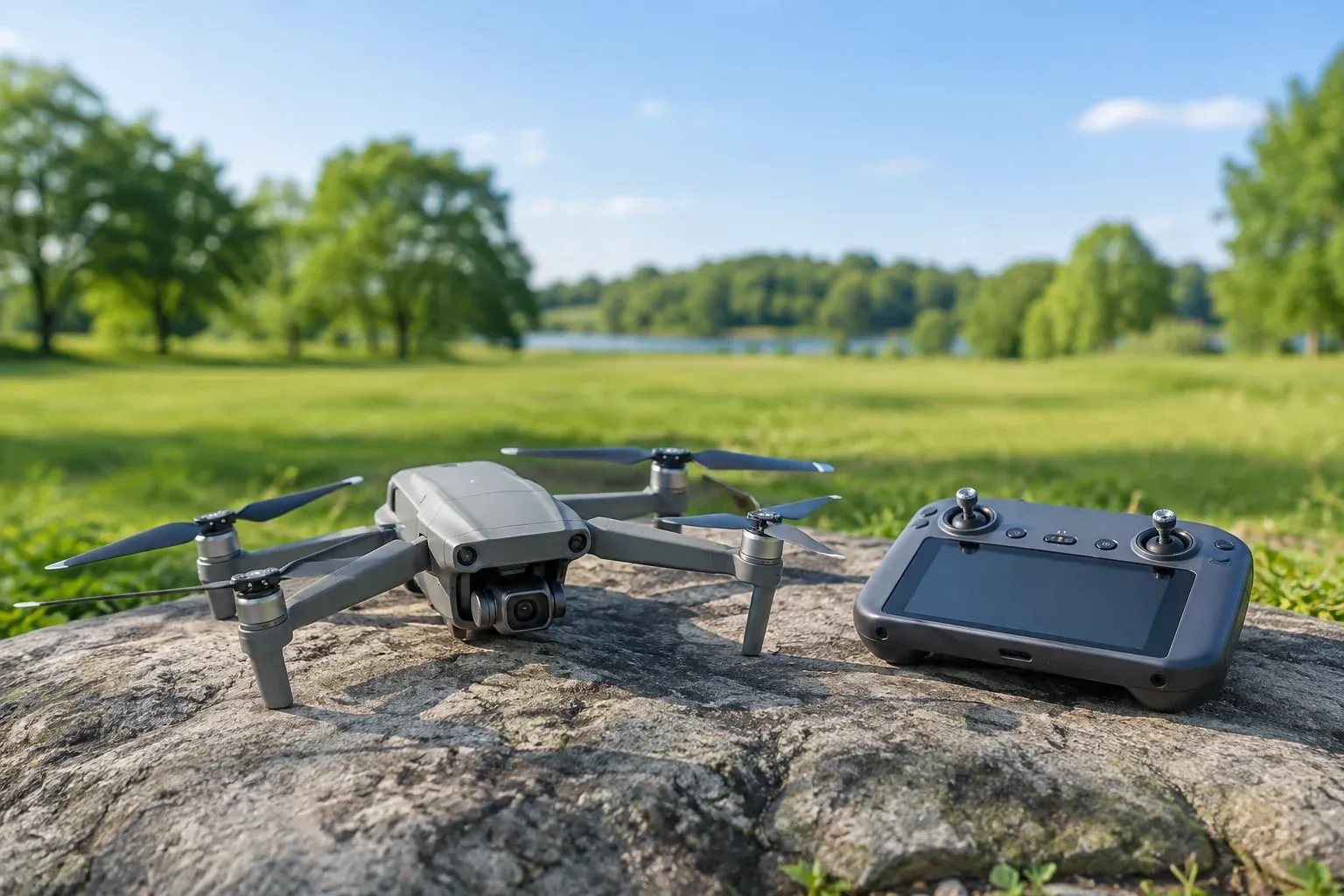
Your First Camera Drone: Choosing One and Flying It Legally in the US and Canada
A camera drone is two purchases in one: a flying machine and a camera. The best first drone is the one you will actually take out, learn on and fly within the rules, so it pays to think about weight, camera and controls before resolution numbers.
Weight is the first decision, because it changes the paperwork. Drones that weigh less than 250 grams, about 0.55 pounds, sit below the registration threshold in both the United States and Canada. They also fold small enough to fit in a jacket pocket or a small bag, which means they come along on trips instead of staying home. The trade-off is wind: a light drone is pushed around more on a gusty day, so check its rated wind resistance and plan to fly in calmer conditions.
Heavier drones usually carry larger camera sensors and handle wind better, which shows in low light and in high-contrast scenes. If you shoot mostly at sunrise and sunset or want footage for paid work later, the extra weight can be worth the extra steps.
For the camera itself, look for a three-axis mechanical gimbal. It keeps the horizon level and the footage smooth while the drone tilts to fight the wind. 4K video is standard now; what separates models is sensor size, the ability to record in a flat color profile for editing, and whether the camera can rotate for vertical shots.
Safety features matter more on a first drone than on any later one. Obstacle sensors on the front, back and underside help avoid trees and walls. A reliable return-to-home function brings the drone back when the signal drops or the battery runs low. Spare batteries are worth buying at the start, since one charge typically gives well under half an hour of flight.


