Getting Steady Footage From an Action Camera
Action cameras are built to be mounted and forgotten, but the footage is only as good as the decisions made before pressing record. Most shaky or unwatchable clips come down to three things: where the camera is mounted, how stabilization is set, and which frame rate is chosen.
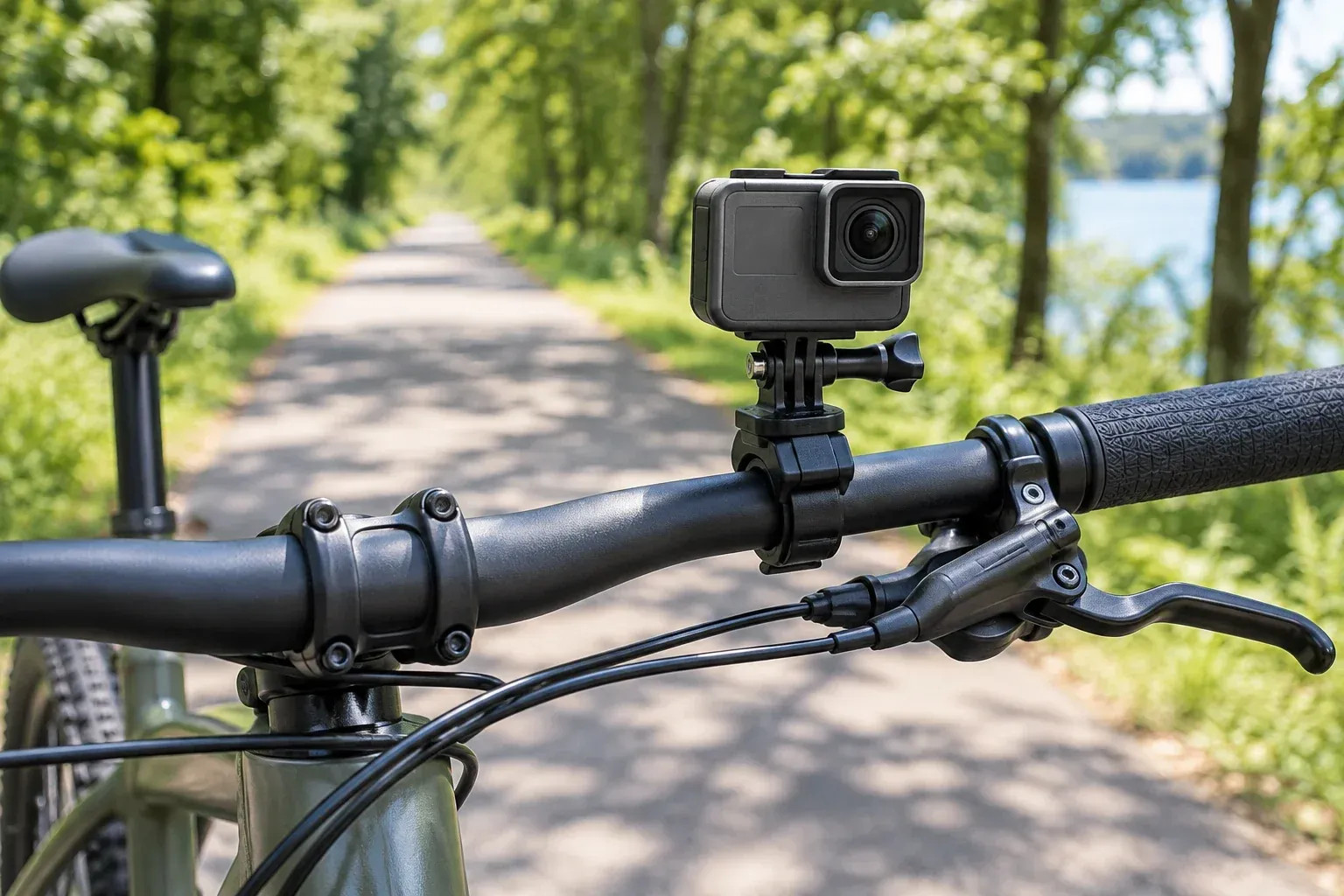
Start with the mount, because it does more for steady footage than any setting. The closer the camera sits to the center of your body, the less it moves. A chest mount is one of the steadiest positions for biking, skiing and hiking, and it shows your hands and handlebars, which gives the viewer a sense of what you are doing. A helmet mount follows your head, so the view turns with every glance; it gives a true point of view but needs smooth, deliberate head movements. Handlebar mounts pick up every vibration from the road or trail, so they work best on smooth surfaces or with a mount that has some rubber damping.
Whatever the mount, tighten it properly and add a tether. A short leash between the camera and the bike, board or strap costs very little and keeps a loose mount from turning into a lost camera.
Electronic stabilization, which most current action cameras offer, works by recording a slightly larger image than you see and shifting the frame to cancel out movement. That is why higher stabilization levels crop the picture a little. For fast activities, the strongest setting is usually worth the narrower view. For slower scenes, a lighter setting keeps more of the frame. Horizon leveling, where available, holds the horizon flat even when the camera tilts, which helps a lot with helmet and handheld footage.
Stabilization needs light to work well. In bright daylight the camera uses a fast shutter, so each frame is sharp and the software can align them cleanly. In dim light the shutter slows down, and movement turns into blur that stabilization cannot remove. Expect the smoothest results outdoors in daylight, and keep indoor or evening shots slower and more deliberate.
Frame rate sets how motion looks. 24 or 30 frames per second gives a natural, everyday look and keeps file sizes manageable. 60 frames per second makes fast motion look smoother and lets you slow a clip to half speed in editing without it stuttering. 120 frames per second and above is for slow motion; use it for the moment you want to stretch out, not for a whole ride, since the higher rates often lower resolution and fill memory cards quickly.
Resolution matters less than people expect for steady footage. 4K gives room to crop and reframe later, but 1080p at a higher frame rate can be the better choice for very fast action.
Before an important day, film a short test run with the mount and settings you plan to use and watch it back on a large screen, not the camera's small display. Small problems such as a rattling mount, a tilted angle or a strap in the frame are much easier to fix at home than on a trail.
Finally, look after the basics: a clean lens, a charged battery with a spare, and a fast memory card that meets the camera's recommended speed rating. Those small habits are what let a well-mounted camera record every moment you set out to capture.


