How to Choose a Laptop: Processor, Memory, Storage and Screen
Start from what you will do on the laptop, not from the spec sheet. Browsing, email and documents need far less than photo editing, software development or games.
Memory matters more than most people expect. 8GB is the minimum for everyday use today; 16GB keeps many browser tabs and apps open without slowing down, and creative work benefits from more.
Choose an SSD of at least 256GB, and 512GB if you keep photos or large files on the laptop. An SSD makes start-up and app launches fast, and in many thin laptops it cannot be upgraded later.
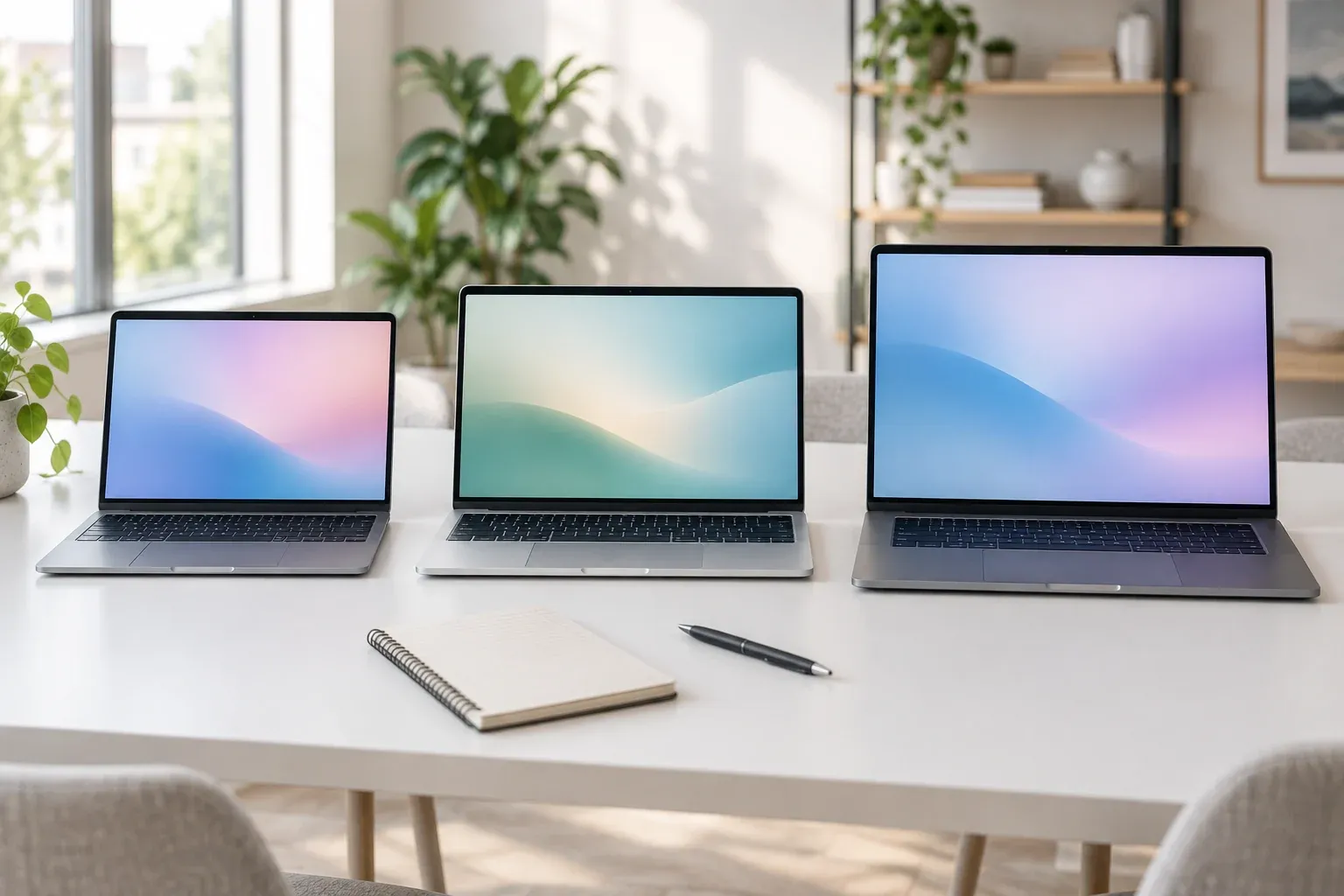
Screen size sets how portable the laptop is. 13 and 14-inch models are easy to carry; 15 and 16-inch models give more room for side-by-side windows. Check the resolution and brightness too, especially if you work near a window.
Finally, look at the ports. If you use a monitor, a camera card or wired accessories, make sure the laptop has the HDMI, USB-C or card slot you need, or plan for an adapter.


